Improving product visibility in retail stores is not simply about putting more merchandise on shelves. Customers move through stores quickly, process several visual cues at once, and often overlook products that fail to attract attention at the right moment. Therefore, retailers need to think strategically about where products appear, how they are presented, and what encourages shoppers to stop and explore.
However, better visibility does not always require major changes to the store layout. Strategic product placement, well planned product displays, effective lighting, clear communication, and consistent in store branding can significantly influence what customers notice. Additionally, these elements can make product categories easier to understand while helping new launches, promotional ranges, and priority merchandise stand apart from surrounding visual information.
Moreover, effective retail merchandising should support the entire customer journey, from initial discovery to product comparison and final purchase consideration. As a result, businesses should evaluate visibility as a combination of placement, presentation, communication, and customer movement. The following ten practical retail display ideas explore how retailers can strengthen product discovery and create a more organised, engaging shopping environment.
Why Product Visibility Matters in Retail Stores?
Strong product visibility helps shoppers discover relevant merchandise, understand available choices, and navigate stores confidently. Additionally, strategic presentation draws attention to priority products, supports informed purchase decisions, and creates a more organised and engaging shopping experience.
Faster Recognition
Visible merchandise helps shoppers recognise relevant products quickly without searching through crowded shelves or displays.
Greater Confidence
Clear presentation makes product choices easier to understand, helping customers compare options and purchase confidently.
Higher Engagement
Distinctive displays encourage customers to pause, explore products, notice features, and interact with promotional messages.
Better Experience
Well planned visibility creates a more organised store environment that feels easier to navigate and explore.
10 Ways to Improve Product Visibility
Explore ten practical ways to improve product visibility using strategic placement, engaging displays, effective lighting, clear communication, and smarter merchandising throughout the customer journey.
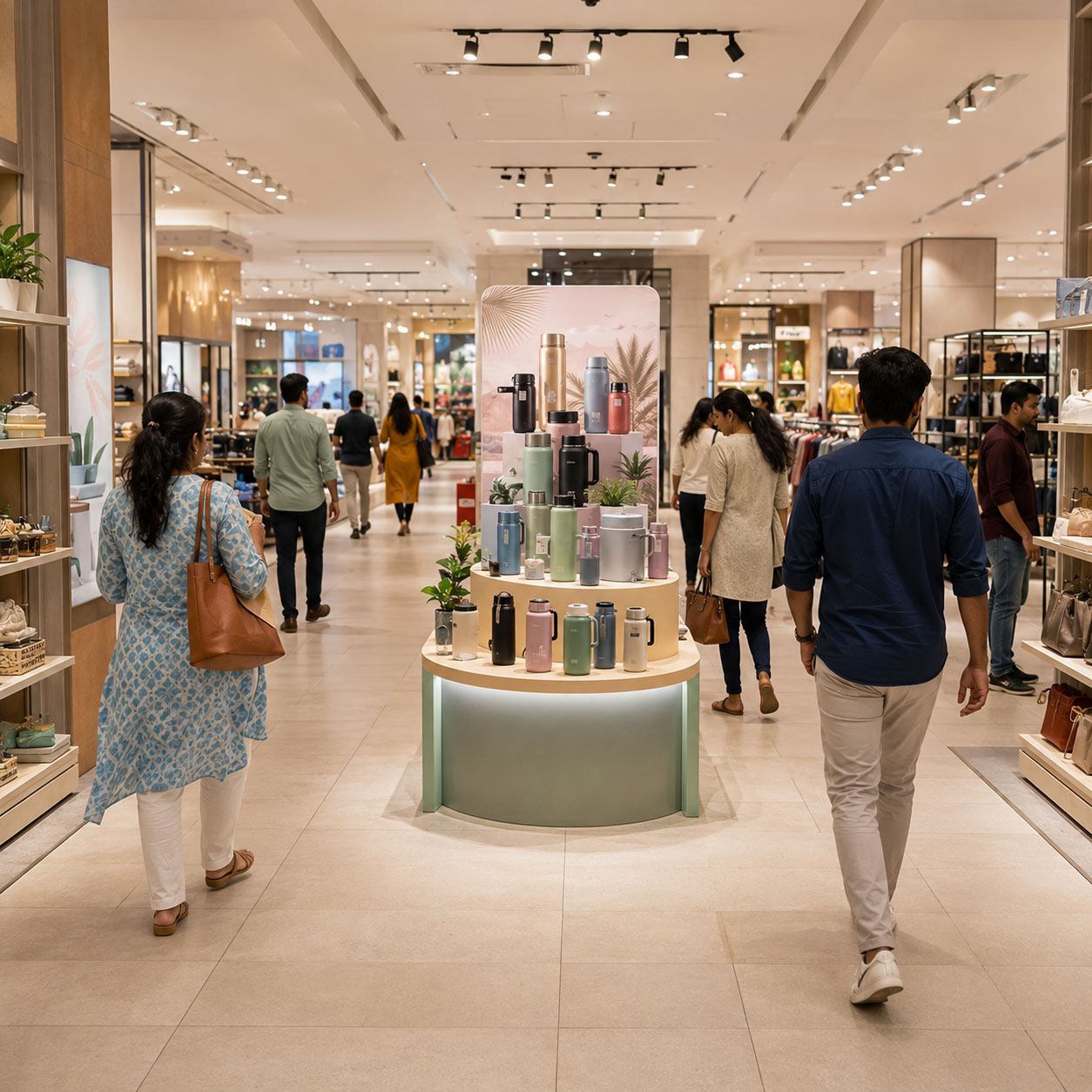
Turn High Traffic Areas Into Discovery Zones
High traffic areas should do more than move customers through the store. They can become strategic discovery zones for new launches, seasonal collections, or priority merchandise. Therefore, retailers should identify natural customer routes, including entrances, main aisles, category transitions, and checkout approaches, before deciding where featured products belong. However, placing additional merchandise in every busy location can create congestion and reduce its impact. Instead, select one clear focal point and provide enough surrounding space for customers to notice it naturally. Additionally, periodically rotating featured merchandise keeps these locations relevant for returning shoppers. This approach improves product visibility in retail stores by aligning product placement with actual customer movement rather than relying solely on conventional shelf positions.
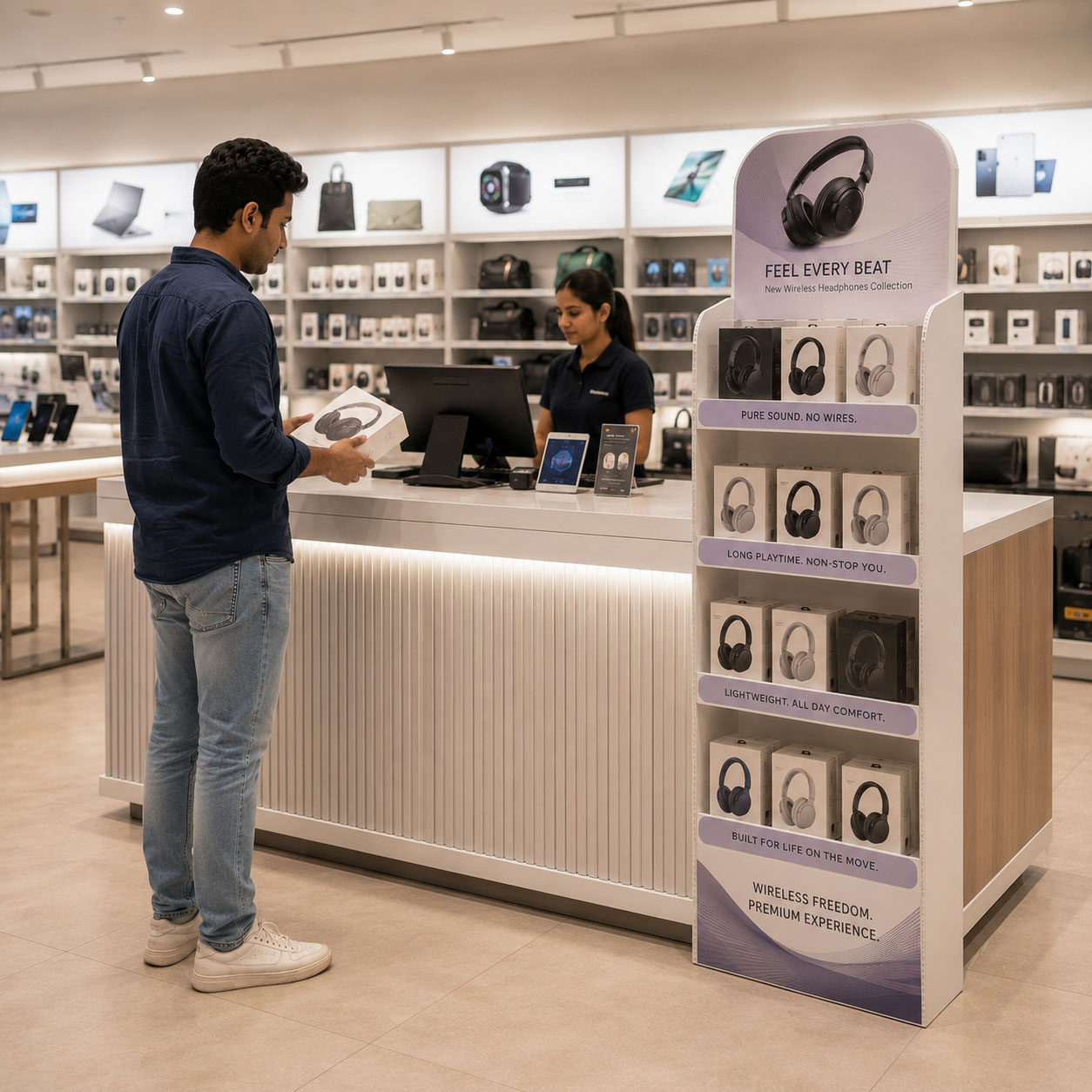
Create a Product Stage With Floor Standing POSM
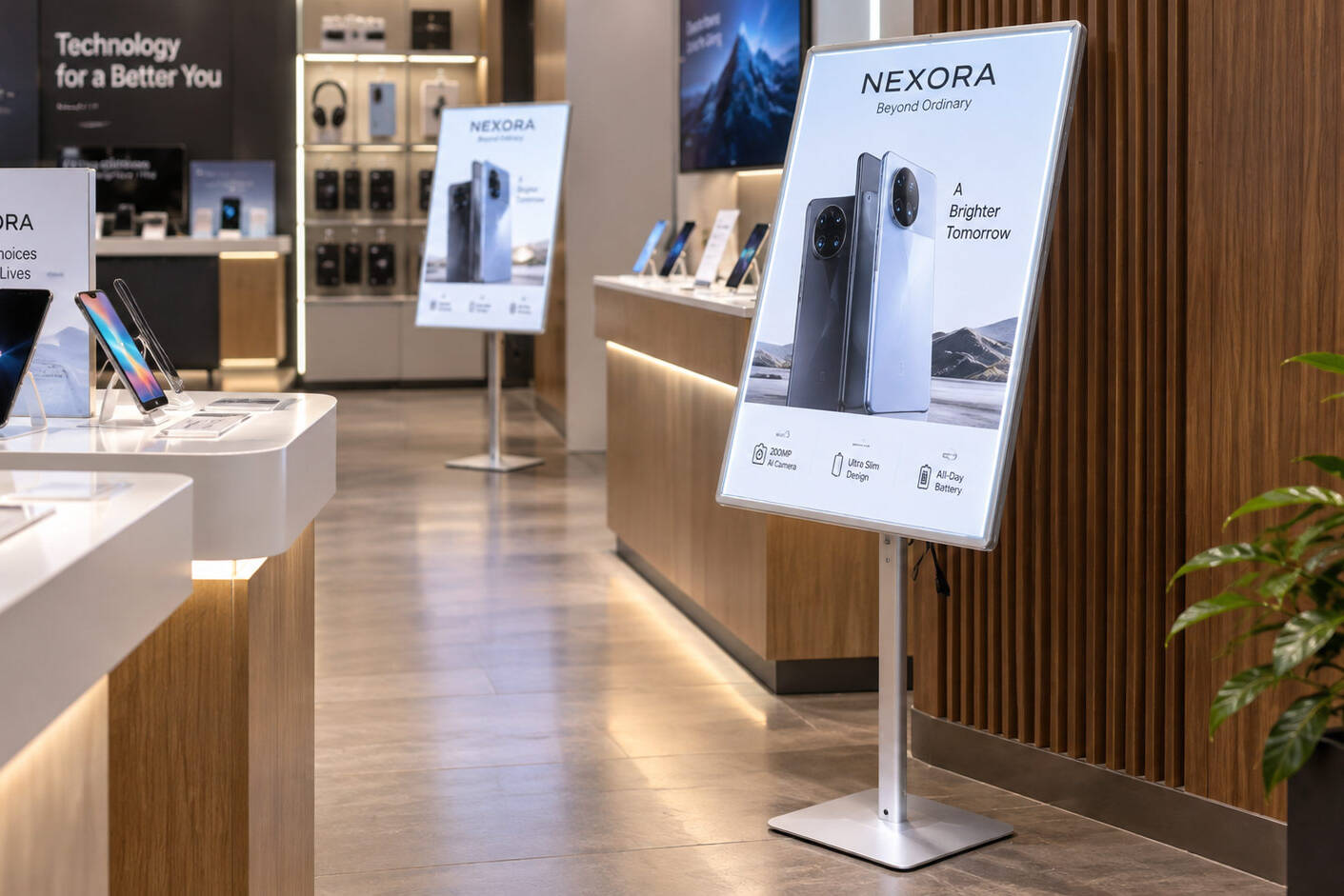
A floor standing POSM can give selected merchandise its own temporary stage within a busy environment. Unlike standard shelving, the unit combines physical products and promotional communication within one focused presentation. Therefore, it works particularly well for launches, limited collections, seasonal campaigns, and impulse purchase categories. Position the display where customers can approach it comfortably without interrupting circulation. Additionally, graphics should communicate one dominant message while the merchandise remains easy to see and access. For campaigns requiring flexible placement, professionally fabricated floor standing POSM displays can create dedicated promotional zones without permanent fixtures. However, the structure, graphics, and products should work together as one product display, rather than competing for attention.
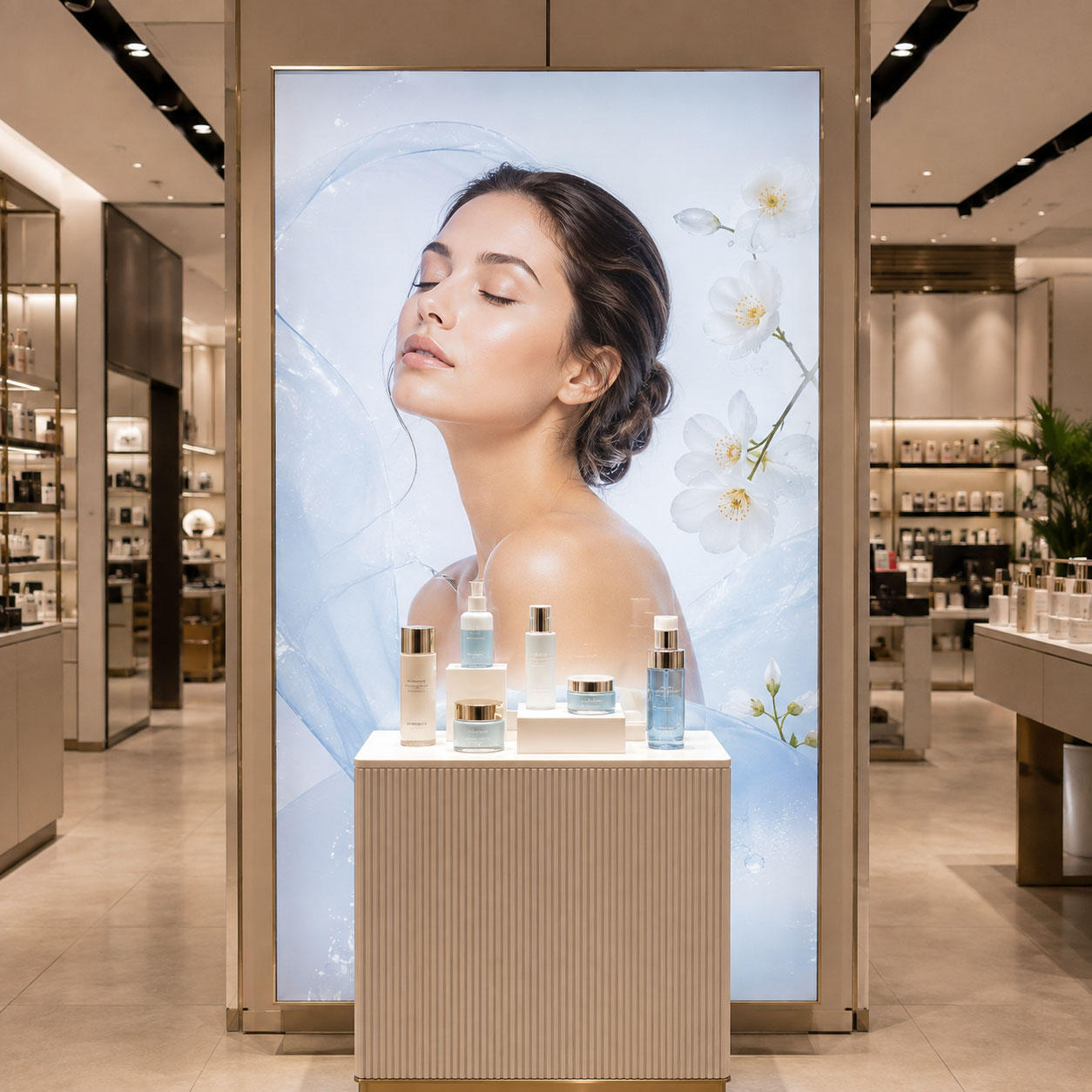
Make Light Part of the Product Story
Illumination can establish a strong visual focal point before customers even read a promotional message. Therefore, fabric light boxes can be particularly effective for highlighting hero products, premium collections, new launches, and campaign communication. Their bright, evenly illuminated graphics help important visuals stand apart from surrounding merchandise while maintaining a clean and professional presentation. For example, a fabric light box positioned behind a featured product can connect campaign imagery with the physical merchandise and create a distinctive display zone. Additionally, large format graphics can improve visibility from greater viewing distances and strengthen the overall visual hierarchy. However, illumination should remain balanced with the surrounding environment. Even brightness, sharp graphics, appropriate positioning, and controlled reflections are essential because hotspots, dark patches, or excessive glare can reduce the effectiveness of the product display.
Build a Visual Hierarchy, Not Just an Eye Level Shelf
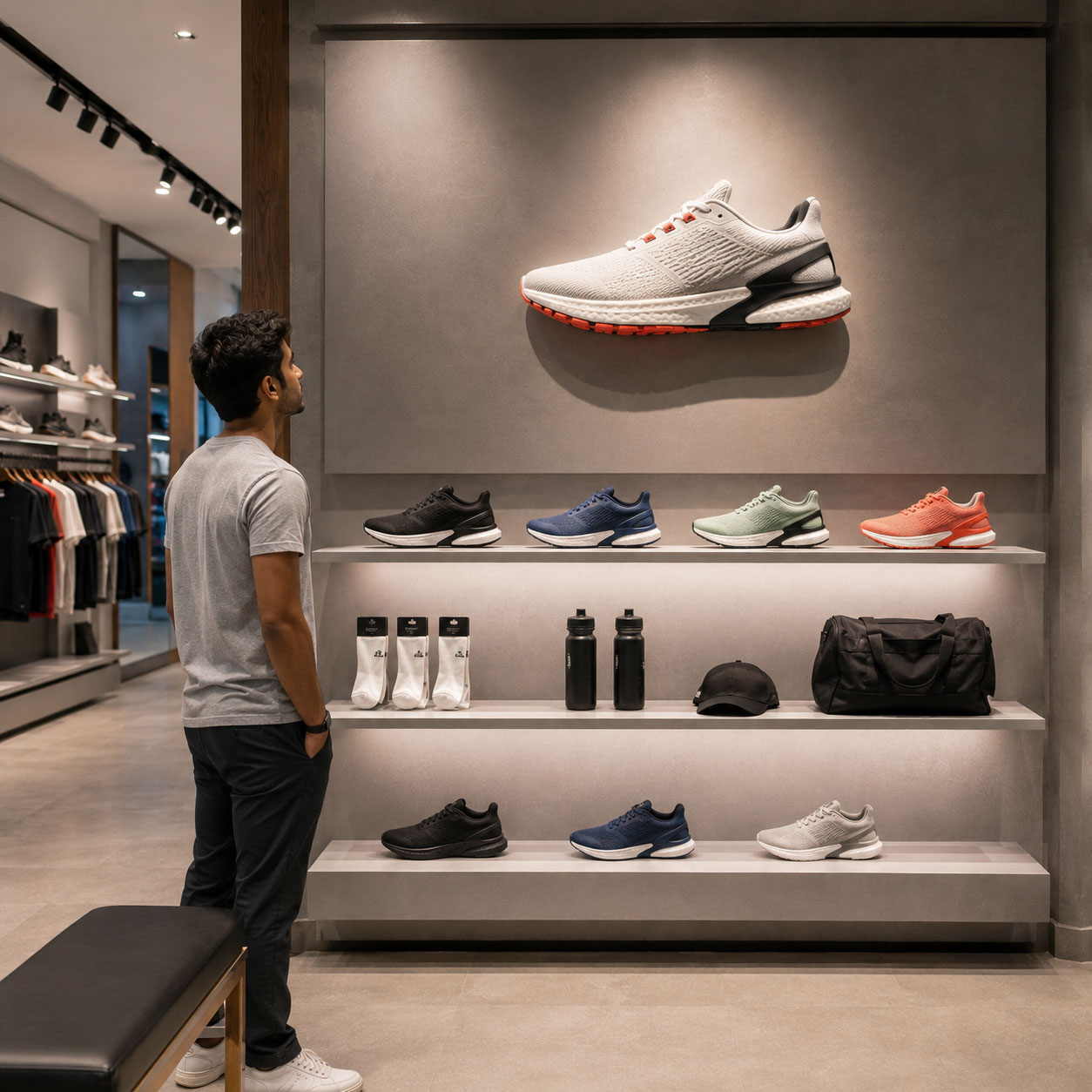
Eye level placement is valuable, but effective visibility requires more than moving products to one shelf height. Instead, retailers should create a visual hierarchy that tells customers where to look first, second, and third. A hero product can occupy the strongest viewing position, while complementary variants and supporting information sit around it in descending visual importance. Therefore, the display remains easy to understand even when several choices are available. Additionally, spacing can be as influential as height. Giving priority merchandise breathing room helps distinguish it from densely stocked surrounding shelves. However, ideal viewing height should reflect the target customer, merchandise type, and shopping context. Thoughtful retail merchandising turns an ordinary shelf into a structured visual journey rather than a uniform wall of products.
Give New Launches Their Own Destination
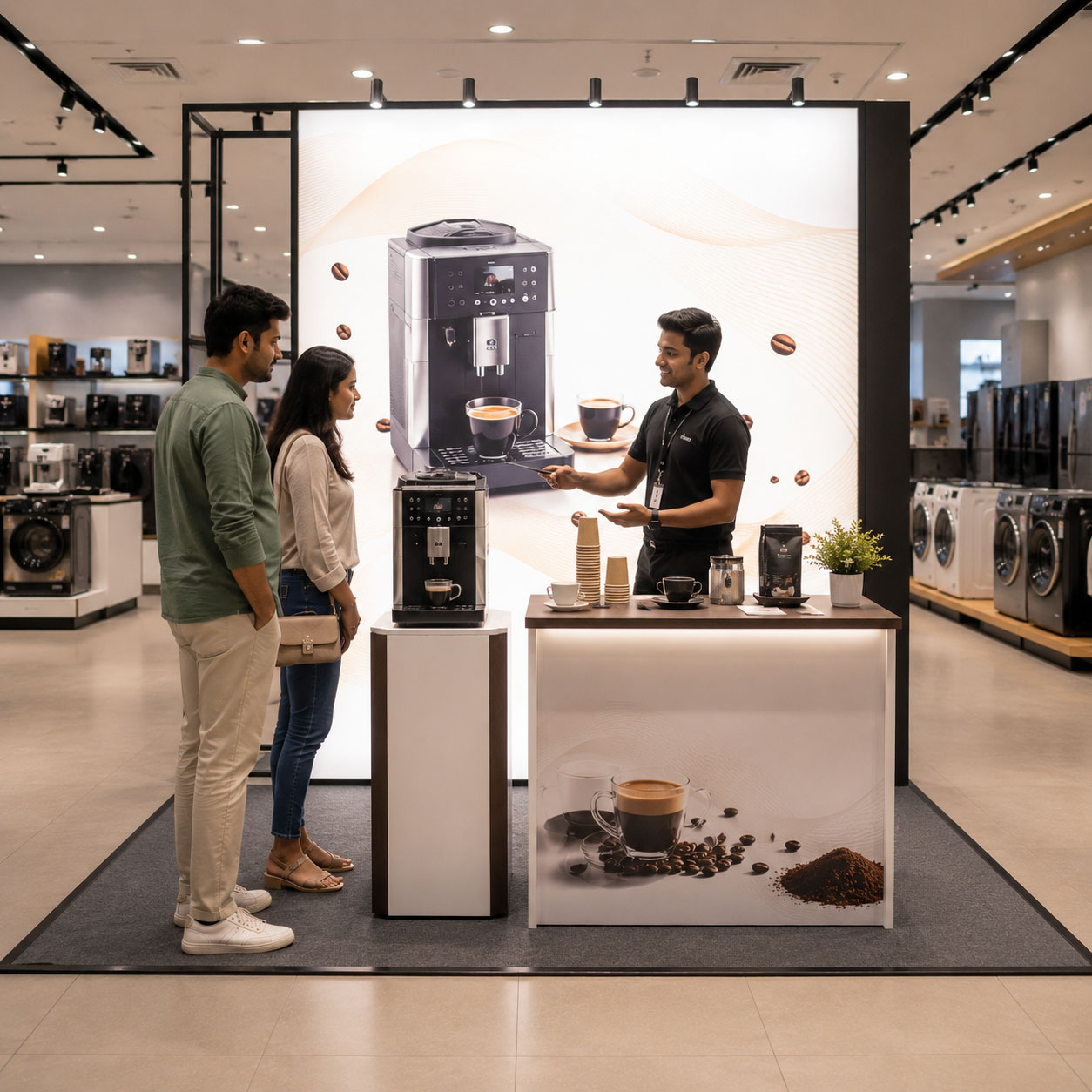
A significant launch can lose impact when new merchandise is simply added to an existing category shelf. Instead, create a temporary destination that customers can recognise as something genuinely new. Combine a hero product, campaign visual, concise feature communication, and carefully selected supporting merchandise within one defined zone. As a result, customers can understand the launch before exploring individual variants. Additionally, the area can become a useful point for demonstrations, sampling, or staff interaction when appropriate. However, a launch zone should remain selective. Filling it with the complete product range can dilute the central message. This approach turns in store branding into an experience, giving important launches a distinct physical identity while making new products easier to discover and remember.
Turn In Store Branding Into a Navigation System
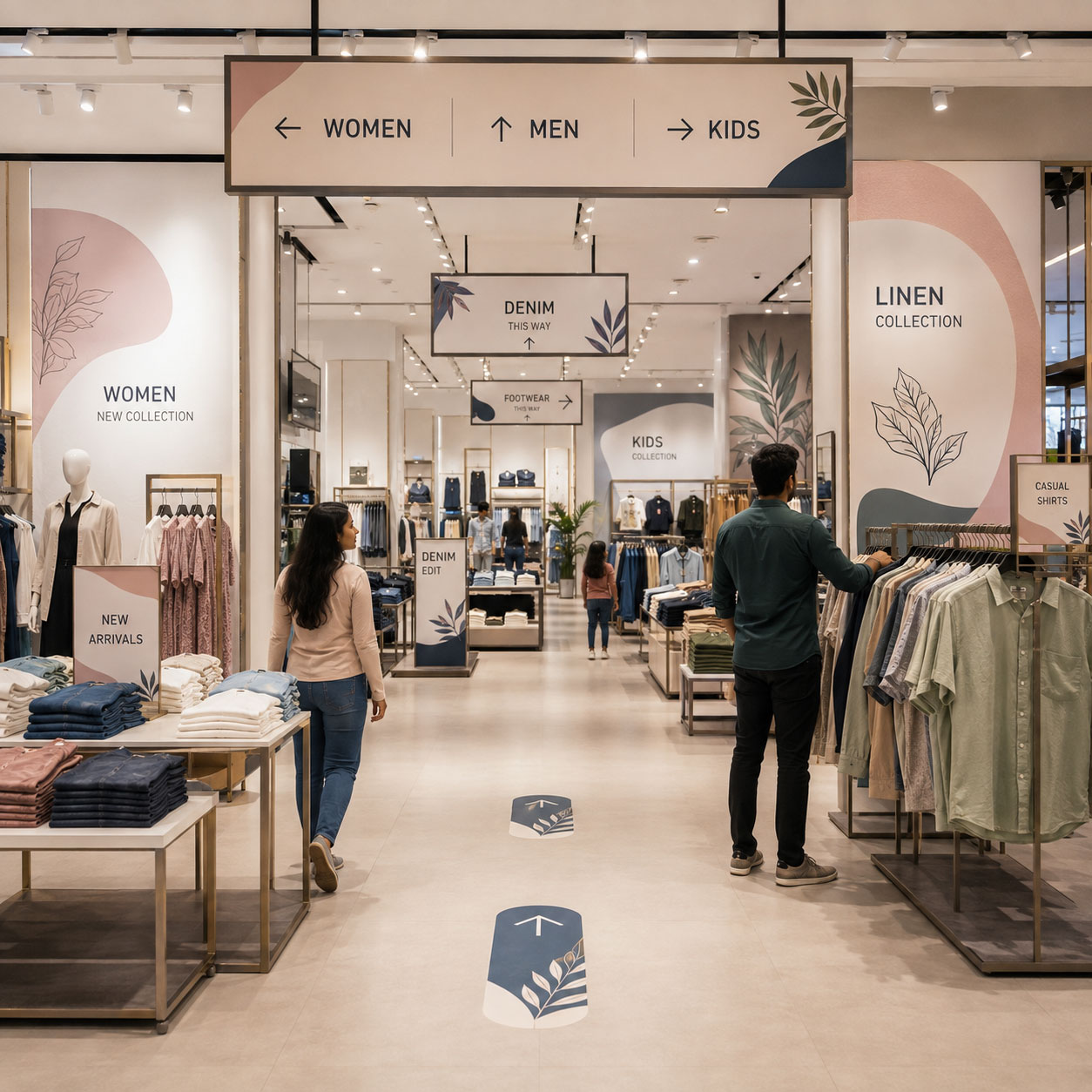
Customers should not have to search unnecessarily for categories, features, or promotional areas. Therefore, effective in store branding can function as a visual navigation system that guides attention throughout the shopping journey. Category markers, hanging signs, shelf communication, wall graphics, and directional cues should share a consistent visual language while serving different purposes. Additionally, information should appear where customers actually need it, rather than being concentrated around the entrance. For example, category identification can work at long viewing distances while product features become more detailed as shoppers approach merchandise. However, consistency should not mean repetition everywhere. A clear hierarchy of signs and graphics helps customers navigate independently while allowing priority merchandise to remain visually prominent.
Let Digital Displays Demonstrate What Shelves Cannot
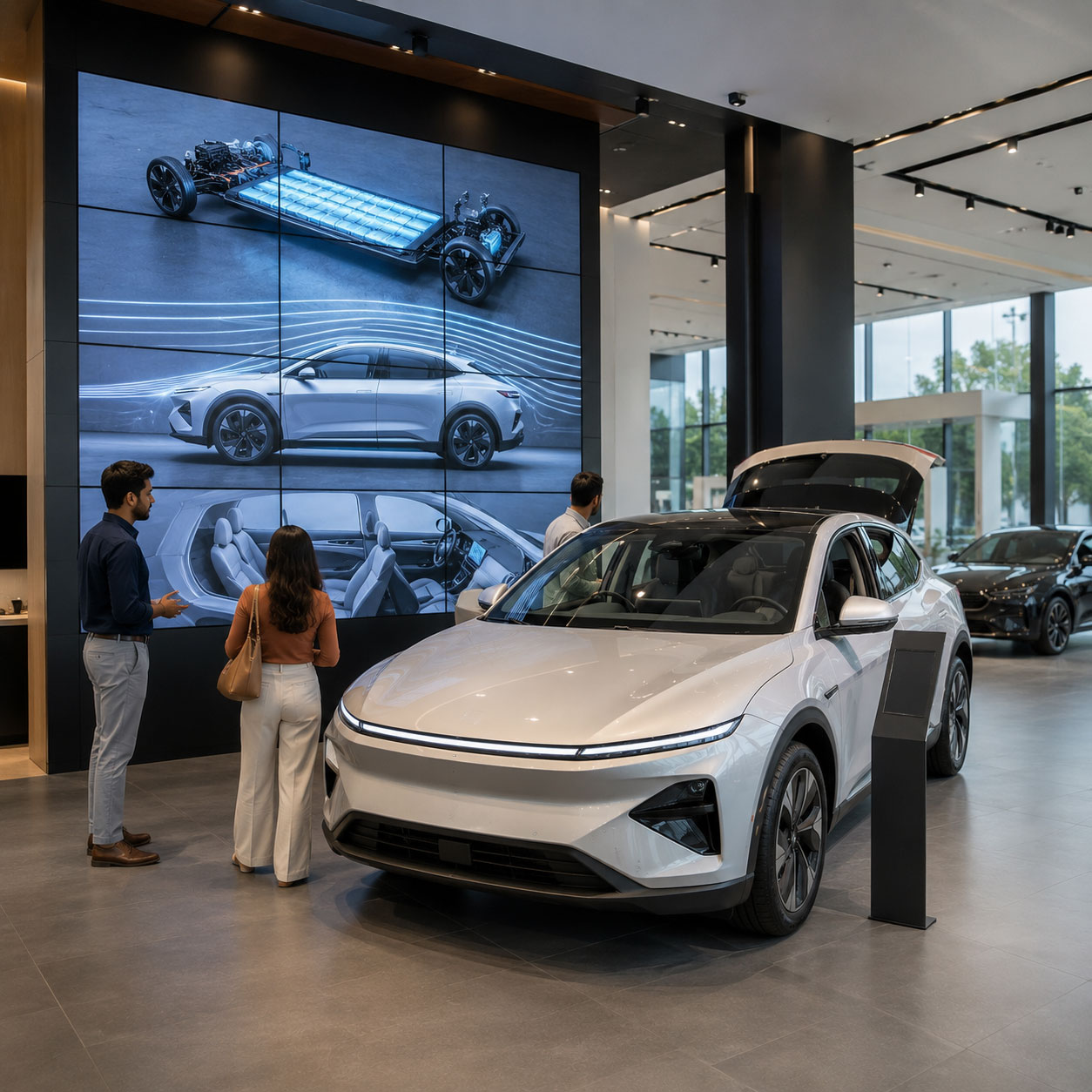
Some product benefits are difficult to communicate through packaging or static graphics alone. Digital displays can show movement, functionality, scale, transformation, or real world application while customers examine the physical merchandise. Therefore, they are particularly useful for electronics, automotive, sports, beauty, and technically differentiated products. A video wall beside the merchandise might demonstrate features that cannot be experienced immediately on the sales floor. Additionally, content can change according to launches or campaigns without rebuilding the physical installation. However, digital movement should have a defined purpose. Constant animation across multiple screens can compete with the merchandise and create visual fatigue. Effective digital product displays use motion selectively, allowing the screen to explain the product while the physical item remains the primary focus.
Put Useful Information Where Decisions Happen
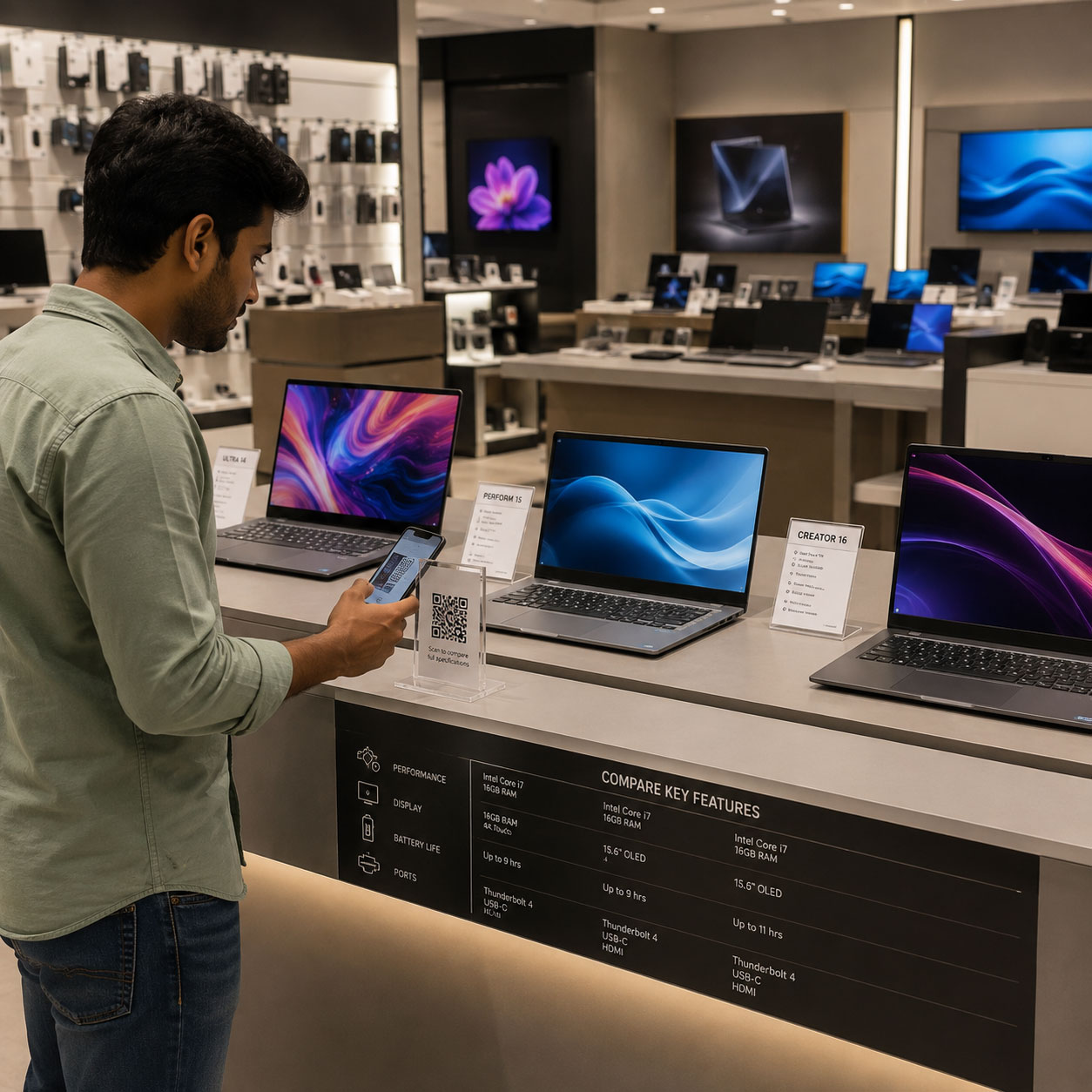
Visibility is not only about attracting customers from across the store. Once a shopper reaches the shelf, useful information must become visible at the exact point of comparison. Therefore, shelf strips, feature cards, comparison panels, promotional callouts, and QR access can help customers understand differences without leaving the category. For example, a concise feature card can explain why one appliance suits a particular use while a QR code provides access to detailed specifications. Additionally, information should follow a hierarchy, starting with the most decision relevant facts. However, overcrowding shelves with claims and labels can have the opposite effect. Effective retail merchandising makes essential information easy to scan while allowing packaging and physical products to remain visually dominant.
Merchandise Around a Need, Not a Category
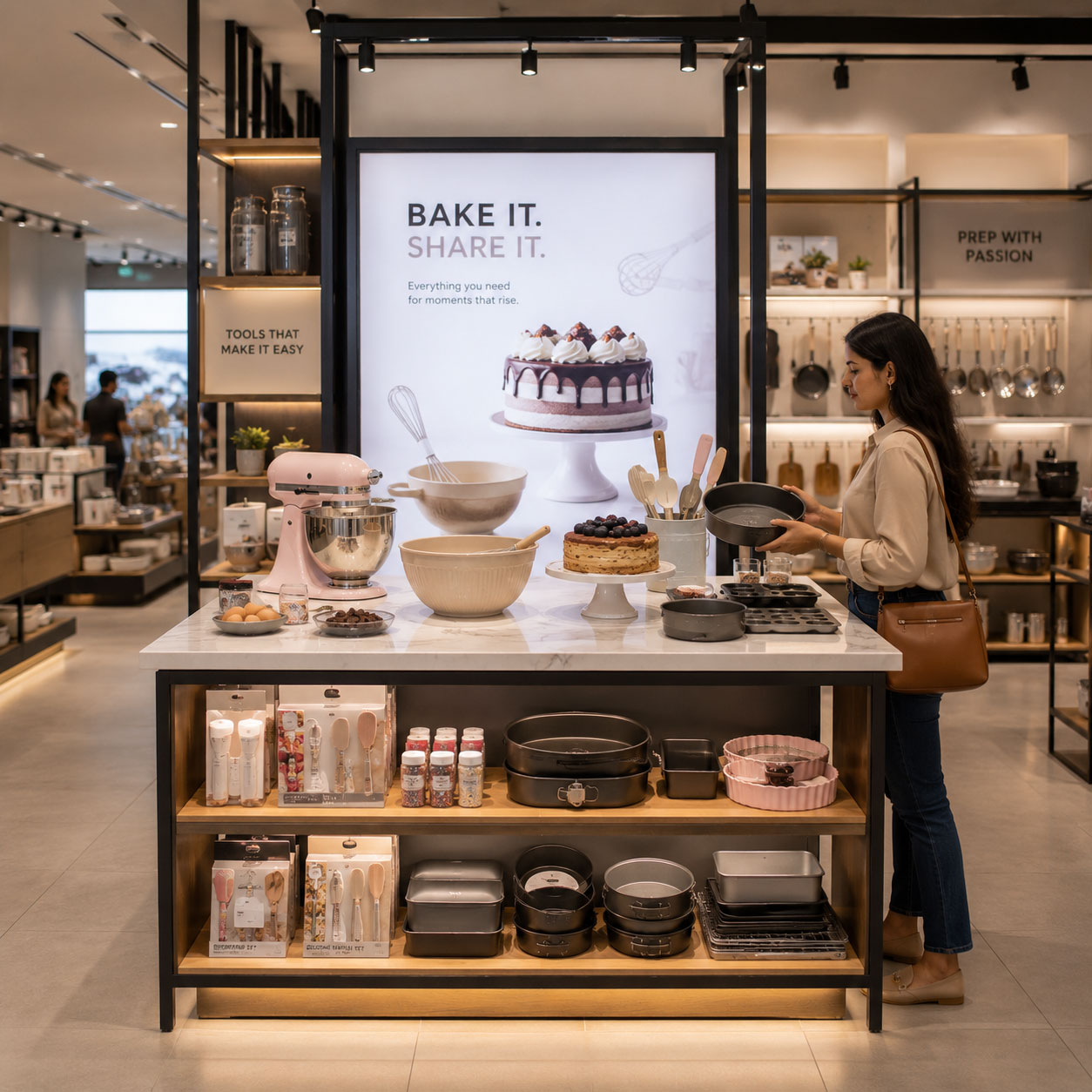
Customers often think about what they want to accomplish rather than how a store classifies its inventory. Therefore, cross merchandising can improve discovery by bringing complementary products together around a specific activity, occasion, or need. A baking setup, for example, might combine bakeware, ingredients, decorating tools, and serving accessories into one cohesive presentation. As a result, shoppers can discover relevant products that would normally sit in separate departments. Additionally, need based displays can inspire customers by showing how individual items work together. However, every product in the arrangement should contribute to the central idea. Random product combinations can appear promotional rather than useful. Creative retail display ideas become more effective when they solve a recognisable customer need.
Treat the Store as a Living Test Environment
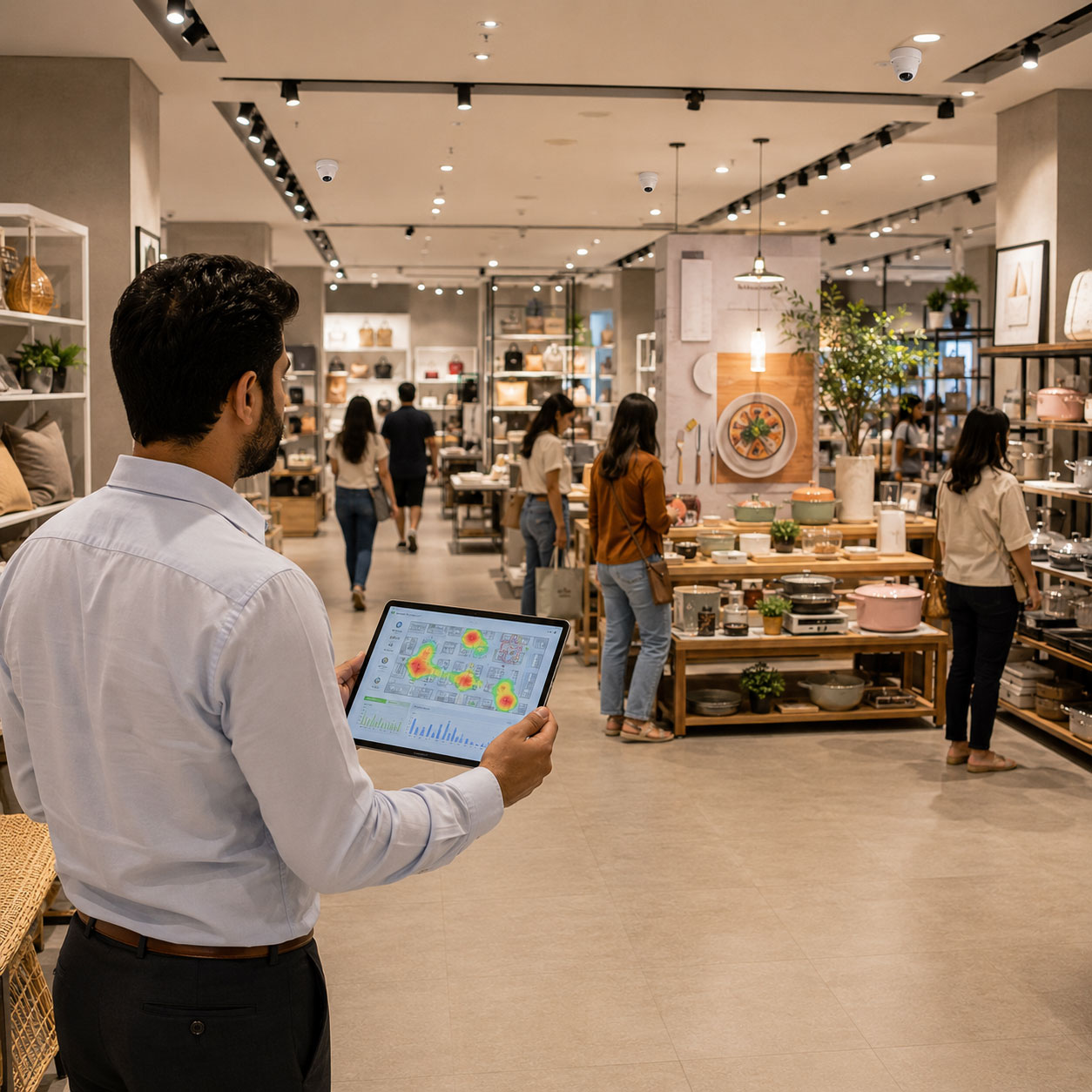
The most effective visibility strategy should evolve with customer behaviour rather than remain fixed indefinitely. Therefore, retailers can observe movement patterns, dwell areas, frequently ignored displays, product interactions, enquiries, and sales changes after repositioning merchandise. A display that looks impressive may still perform poorly if customers rarely encounter it. Conversely, a modest presentation placed along the right journey can generate stronger engagement. Additionally, retailers can test one variable at a time, such as position, display format, communication, or lighting, to understand what influences attention. Over time, these observations create a more evidence based approach to product visibility in retail stores. As a result, merchandising decisions become an ongoing process of testing, learning, and improving.
How to Choose the Right Visibility Strategy?
Not every product needs the same visibility approach. Therefore, retailers should consider the objective, customer movement, display environment, and expected outcome before making changes. This four step framework helps businesses choose relevant retail display ideas while keeping product communication focused, practical, and measurable.
Set Objective
Define whether the priority is product launches, discovery, promotions, cross selling, or customer education goals.
Study Movement
Identify high traffic routes, customer dwell areas, decision points, and overlooked spaces before placing merchandise.
Match Strategy
Select suitable displays, lighting, POSM, digital communication, or merchandising according to location and shopper intent.
Measure Impact
Track customer interactions, enquiries, product movement, and sales performance, then refine visibility decisions accordingly.
Common Product Visibility Mistakes to Avoid
Even well designed product displays can lose effectiveness when too many visual elements compete for customer attention. Therefore, retailers should consider not only how merchandise is presented, but also what may prevent shoppers from noticing it. Avoiding a few common mistakes can help maintain clearer product communication and a more organised shopping experience.
- Too Much Communication: Excessive promotional messages, graphics, signs, and offers can compete for attention. As a result, customers may overlook the product that the display was originally designed to highlight.
- Poor Display Placement: An impressive display can still underperform when positioned away from natural customer pathways. Therefore, placement should reflect traffic patterns, viewing angles, and relevant decision points.
- Overcrowded Merchandising: Filling every available space with merchandise can weaken visual hierarchy. Instead, priority products should have sufficient breathing room to remain noticeable and easy to explore.
- Set and Forget: Customer behaviour and promotional priorities change over time. Therefore, retailers should regularly review product interactions, placement, and performance rather than leaving the same displays unchanged indefinitely.
Why ChooseGogia Print-O-Grafix?
Improving product visibility in retail stores requires the right combination of communication, fabrication, placement, and presentation. Therefore, Gogia Print-O-Grafix works with brands and retailers to develop visibility solutions around specific products, campaigns, store environments, and customer touchpoints.
- Custom Display Solutions: Product displays and promotional formats can be developed according to merchandise, available space, campaign objectives, and customer interaction requirements.
- Multiple Retail Formats: Solutions can include POSM, illuminated displays, signage, promotional communication, and other in store branding applications for different retail environments.
- Campaign Focused Execution: Display formats can support new launches, seasonal campaigns, promotional ranges, category communication, and other visibility requirements.
- Integrated Approach: Additionally, different display elements can work together to create consistent communication while supporting the overall retail merchandising strategy.
As a result, retailers can move beyond isolated promotional installations and create a more coordinated approach to product discovery. Moreover, carefully selected visibility solutions help priority merchandise stand out while maintaining an organised, professional, and customer friendly store environment.
Fill the Enquiry Form Below!
Conclusion
Improving product visibility in retail stores is ultimately about making it easier for customers to notice, understand, and explore relevant merchandise throughout their shopping journey. Therefore, successful visibility should combine strategic placement, clear communication, appropriate lighting, thoughtful product displays, and effective retail merchandising rather than relying on one promotional format.
However, every store, product category, and customer journey is different. A floor standing POSM may work effectively for a new launch, while illuminated communication can strengthen a premium campaign and cross merchandising can introduce complementary products. Additionally, retailers should consider customer movement, viewing distance, available space, and the purpose of each display before deciding which approach to implement.
Moreover, product visibility should never become a one time exercise. Customer behaviour, campaigns, merchandise priorities, and store environments continue to change. As a result, retailers should regularly review performance, test different approaches, and refine their visibility strategy based on measurable customer response.
When placement, communication, and presentation work together, products become easier to discover while the overall shopping environment remains clear, engaging, and purposeful.

Related Posts
Portable Promotional Displays for Retail Stores, Events and Brand Campaigns
Discover how portable promotional displays create flexible, illuminated and…

10 Ways Retail Network Branding Creates Consistent Customer Experiences
Discover how standardised LED promotional frames help brands create consistent…

Shop Renovation Ideas That Do Not Require Major Interior Changes
Explore practical shop renovation ideas that refresh customer facing spaces…